NexaHospitalityAI
A concept AI mission control for hotels and hostels. One real-time dashboard for operations, guest communication, and revenue, designed and prototyped to explore how AI could replace the disconnected tools small properties run on today.
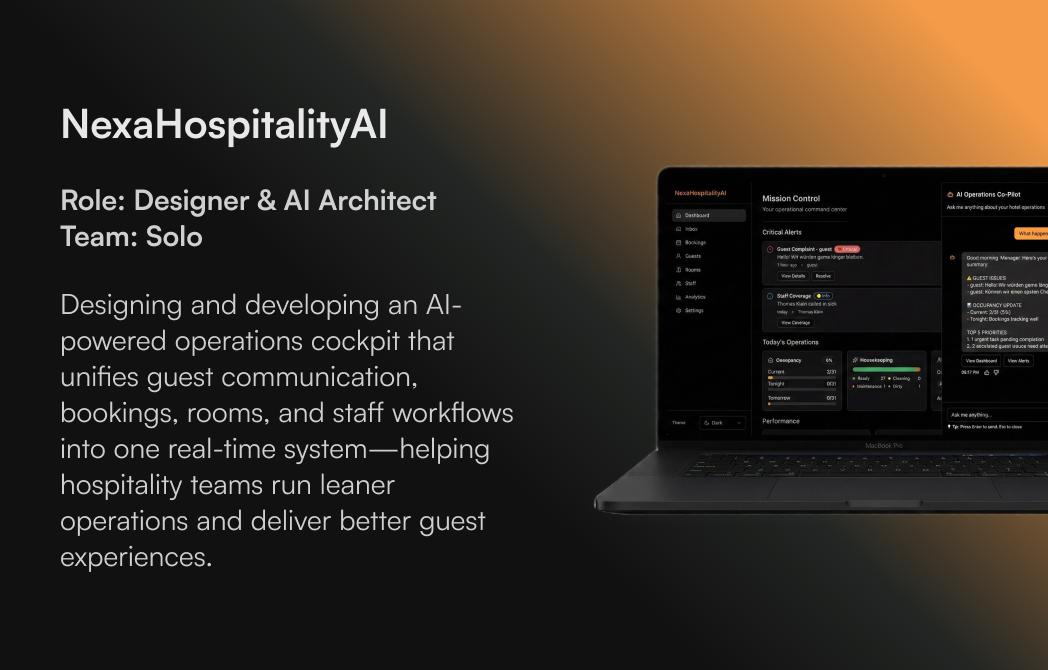
NexaHospitalityAI is a concept product I built under NexaForgeAI to explore how AI mission control could work for small hotels and hostels. It has no live users or business metrics. This case study covers the problem space, the design thinking, and the build.
The Problem
Many small hospitality operators run on duct tape. Guest messages scatter across WhatsApp, email, and booking platform inboxes. Housekeeping and maintenance tracking lives in spreadsheets. Room assignments rely on memory. Revenue reporting happens after the fact, not in real time.
Small and mid-size properties cannot justify enterprise PMS suites, yet they need the same operational clarity. That gap is what I set out to explore.
Research & Positioning
I looked at how small and mid-size properties in Berlin operate day to day: the tools they cobble together, the manual coordination that burns hours, and the guest channels that fragment attention. The opportunity was clear. Build one intelligent system that replaces the spreadsheet and WhatsApp stack entirely.
What I Designed & Built
Mission Control Dashboard
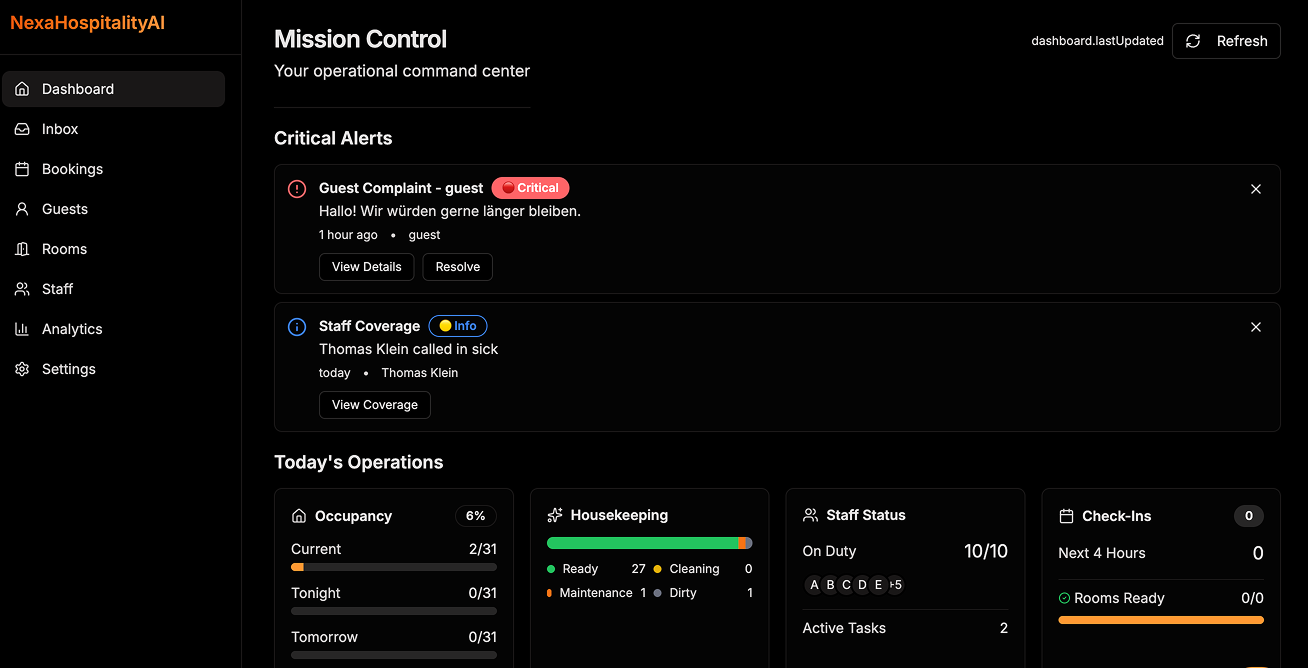
A real-time nerve center showing live check-in status, occupancy rates, housekeeping alerts, revenue metrics, and guest satisfaction KPIs. Everything a front desk manager needs sits in one glance.
Unified Inbox and AI Assistant
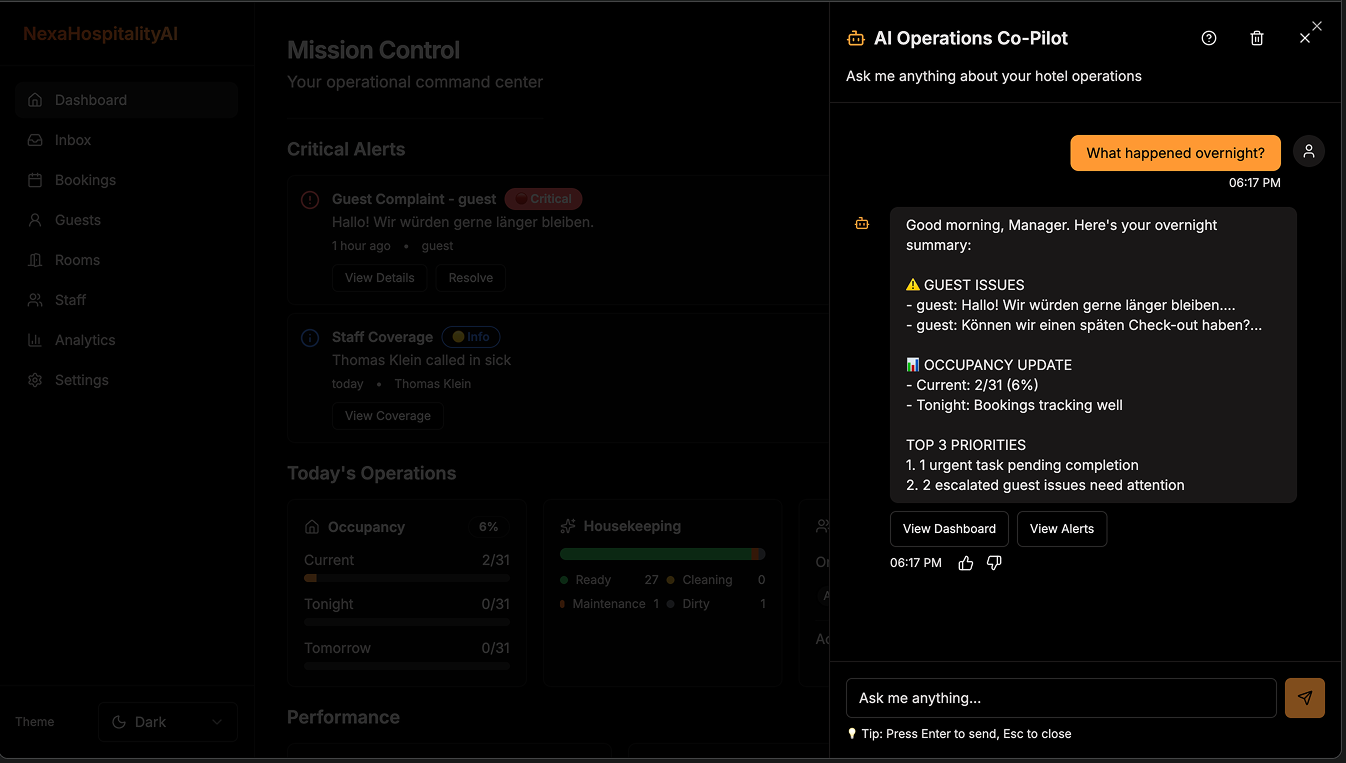
All guest communication (WhatsApp, email, SMS, and booking platform messages) lands in one threaded view. The AI suggests responses in German and English, handles routine requests, and escalates complex issues to staff.
End-to-End Operations
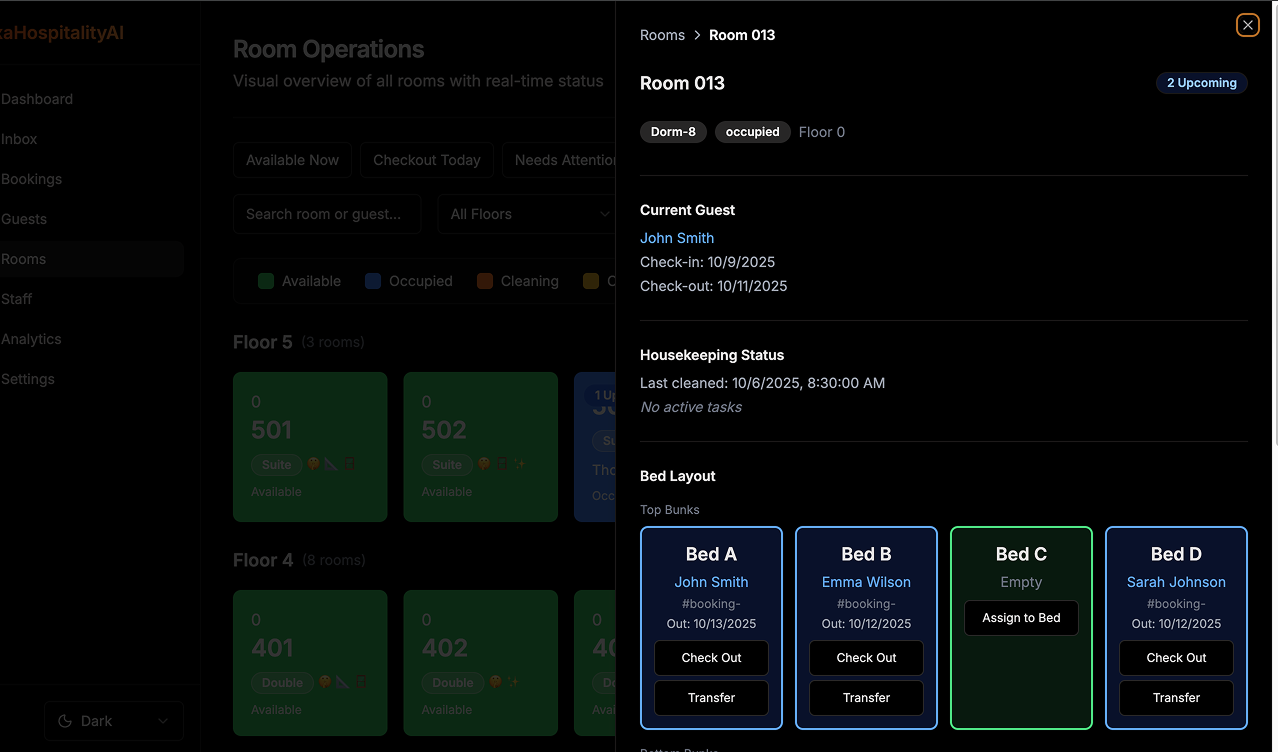
A smart room assignment engine, automated checkout tracking, an upsell suggestion system, and per-room task management. Together they turn reactive operations into proactive workflows.
Guest Intelligence
Rich guest profiles with stay history, preferences, and GDPR-compliant consent. Occupancy analytics and efficiency metrics help properties optimize without guessing.
Build Stack
I built the working prototype with Next.js 14, TypeScript, and React 18. Supabase handles data, Clerk handles auth, and the AI features run on LLM APIs (OpenAI, Gemini, and Anthropic) with n8n for automation flows.
Interface Gallery
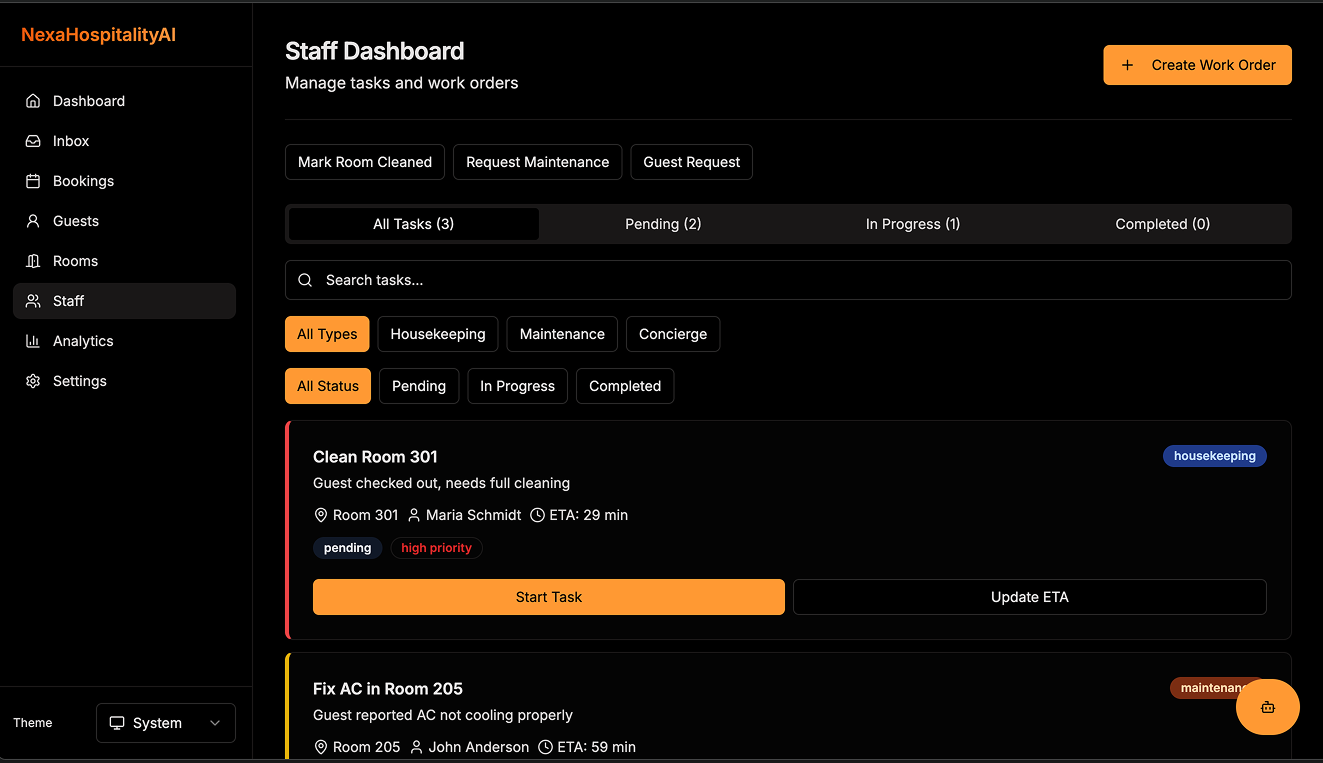
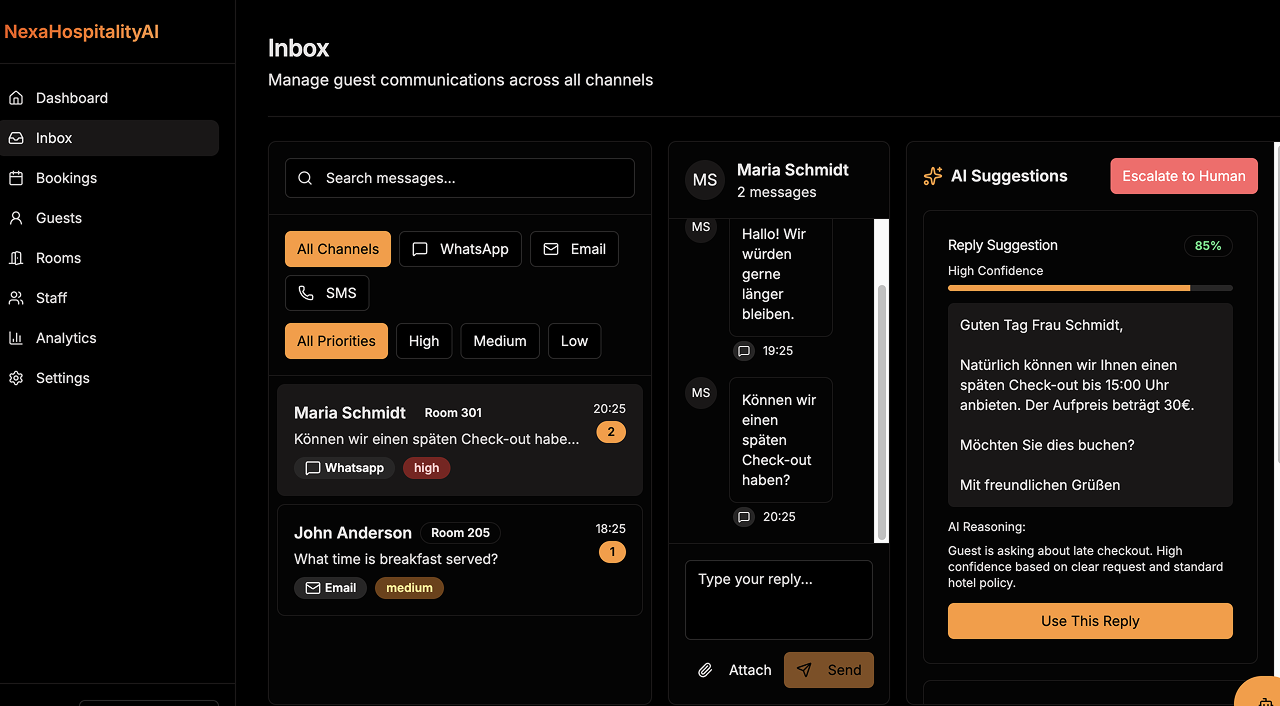
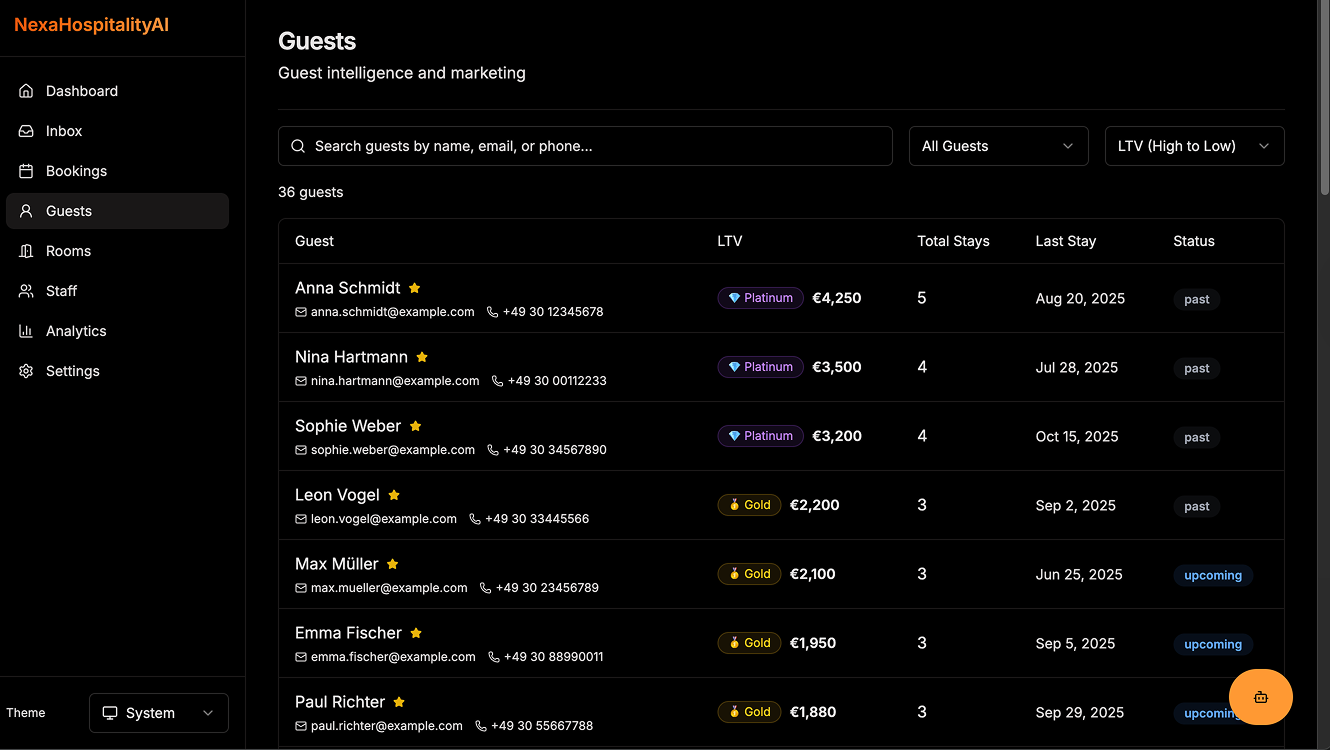
Key Decisions & Tradeoffs
- Information hierarchy first. The dark-mode interface is organized around visual urgency, so the most critical items surface instantly instead of hiding in navigation.
- Multi-device reality. The layout is responsive for front desk monitors, tablets, and mobile, because hospitality staff rarely sit at a desk.
- AI co-pilot pattern. An always-available contextual assistant sits alongside the operator rather than replacing judgment, and it is designed to learn property patterns over time.
- Bilingual from day one. Full DE and EN internationalization is built into the design system rather than added later.
Outcome & What's Next
The result is a polished product design with a working Next.js prototype. As a concept build it has no live users or business metrics. It demonstrates how one intelligent system could centralize hospitality operations, reduce daily manual coordination, and help properties deliver a more consistent guest experience.
Next, I would test the dashboard and unified inbox with real property managers to see which alerts and AI suggestions they trust, then refine the room assignment logic against live occupancy data.
View Live Prototype →